All decades are represented here, from the 50's through 2020, our cutoff date. Get set for 10 more!
For this artist, it was all in the family, until alcohol ruined his career:
#280: Mark Dinning--"Teen Angel"
Dinning followed his sisters, the popular Dinning Sisters of the 1940's, and pursued a career in music and in 1957, signed a recording contract with producer Wesley Rose. Efforts were unsuccessful until "Teen Angel" in 1959, which went to #1 and sold over one million copies.
Dinning's dependency on alcohol led him to appear at performances too intoxicated to perform, caused promoters to stop booking him, and Dinning's star faded. He had three minor hits afterwards, but nothing came close to "Teen Angel".
Dinning's dependency on alcohol led him to appear at performances too intoxicated to perform, caused promoters to stop booking him, and Dinning's star faded. He had three minor hits afterwards, but nothing came close to "Teen Angel".
This London act is cued up next:
#279: Honeycombs--"Have I the Right?"
The Honeycombs, founded in London in 1963 as the Sheratons, consisted of lead singer and harmonica player Denis D'Ell, lead guitarist Alan Ward, rhythm guitarist Martin Murray, bassist John Lantree and drummer Honey Lantree. Peter Pye replaced Murray in 1964.
The group played in the West End of London and at the Mildmay Tavern in North London. The Sheratons arranged an audition with producer Joe Meek. Following a gig by the band in February of 1964, the group met with aspiring songwriters Ken Howard and Alan Blaikley. This led to the Sheratons recording "Have I the Right?"
In the recording, members of the group stomped their feet on the wooden stairs to the studio to enhance the drums in the song. The effect was completed when someone beat a tambourine directly into a microphone. The single was released in June on Pye Records with Pye chairman renaming the group the Honeycombs, a pun on the drummer's name.

"Have I the Right?" reached #1 in the U.K., Australia and Canada, #2 in the Netherlands and #5 in the United States and the single topped one million in sales. The Honeycombs toured Australia and the Far East. Howard and Blaikley acted as the group's managers and wrote two more singles for them, which did not do well.
The Honeycombs could never follow-up their One-Hit Wonder and they split in 1966.
At #278, a songwriter who scored his biggest career success when he released a solo single:
#278: Billy Swan--"I Can Help"
Swan learned to play drums, piano and guitar while growing up in Cape Giradeau, Missouri. Billy also began writing songs and joined a band called Mirt Mirly & the Rhythm Stoppers. One of his songs, "Lover Please" was recorded by Bill Black, former bassist for Elvis Presley. In 1962, Clyde McPhatter recorded his version and it became a #7 hit.
Swan moved to Memphis, Tennessee to work with Black, but Black became ill and died in 1965. Billy also worked for a while at Graceland, Presley's estate. He then moved to Nashville, where he wrote songs for artists such as Conway Twitty, Waylon Jennings and Mel Tillis. In 1969, Swan produced "Polk Salad Annie" for Tony Joe White. Billy also played bass for Kris Kristofferson before signing a recording contract with Monument Records.
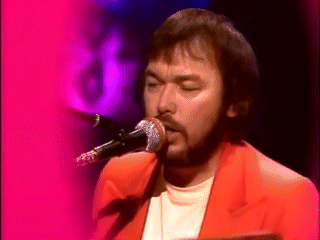
Swan's first single, "I Can Help" went to #1 on both the popular and country charts in the United States in 1974 and became a hit in several other countries. Future albums failed to capitalize on the success, however. Swan played in the Havana Jam Festival in 1979 in Havana, Cuba along with Billy Joel, Stephen Stills, Rita Coolidge, Kristofferson and others.
Swan continued to tour with Kristofferson and played on two albums for Randy Meisner of the Eagles.
This group did all the right things in the music industry, and their dues paid off when they scored their own hit:
#277: System--"Don't Disturb This Groove"
Session keyboardist David Frank and singer/guitarist Mic Murphy met in the early 1980's while working for the group Kleer. Frank was the group's keyboardist on tour while Murphy was the band's road manager.
Later in New York City, Frank was working on a session that resulted in a song called "It's Passion", which featured aspiring singer Madonna on vocals. Because of creative differences, Madonna bowed out. Frank called Murphy and invited him to work on the song. Atlantic Records was so impressed that they offered Murphy and Frank a recording contract. In 1982, the duo founded the group the System and "It's Passion" became a local hit in New York.
The resulting album in 1983 (Sweat) led to several R&B hits. The System appeared in the 1984 movie Beat Street and the title track from their 1985 album The Pleasure Seekers was featured in an episode of Miami Vice on NBC-TV. The System's version of "Rock N' Roll Me Again" was featured in the movie Beverly Hills Cop in 1984, and the title track from the movie Coming to America reached #23 in the R&B chart.
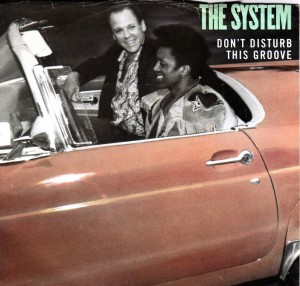
Meanwhile, the group worked with Phil Collins on the song "Sussudio", and lent their talents to Chaka Khan for "I Feel for You". In 1987, the System released the single "Don't Disturb This Groove", the title cut from their new album. The song reached #4 and was a #1 R&B song.
The System enjoyed another Top 10 on the R&B chart with "Nighttime Lover", but neither that song nor future efforts resulted in a mainstream hit. After releasing the album Rhythm & Romance in 1989, the System split up.
Murphy recorded a solo album, while Frank continued to write songs and produce, notably for Christina Aguilera for the song "Genie in a Bottle" in 1999 and for Dream's "He Loves U Not" in 2000.
Up next, a great songwriter who scored a huge solo hit in 1977:
#276: Alan O'Day--"Undercover Angel"
O'Day began creating melodies on a xylophone at age six. Alan went to Coachella Valley Union High School in Hollywood, California. He joined the group called the Imperials before starting his own band, the Shoves. A third group, the Renes, played Latin and Mexican standards mixed with rock and roll songs and gave O'Day the chance to be a songwriter.
In 1961, O'Day helped out with the sound for an independent movie producer and the following year, was music editor on the movie Eegah. This work led to the formation of the band the Archers, which played at clubs such as Whiskey A Go Go and Pandora's Box. In 1965, O'Day was in the band Alan & Bob & Denny, a group which played nightclubs in the area and appeared on The Ed Sullivan Show.
Despite his success, O'Day decided to concentrate on songwriting. In 1969, he signed with E.H. Morris Music, then moved to Warner Brothers Music in 1971. He wrote "The Drum" for Bobby Sherman, then in 1974, three of his songs became hits: "Angie Baby (a #1 song for Helen Reddy), "Rock and Roll Heaven" (by the Righteous Brothers) and "Train of Thought" (by Cher).
In 1971, Warner Brothers organized a recording label for composers who also performed. O'Day was the first artist signed and he wrote "Undercover Angel" in 1977. The song became a #1 record in the United States, #9 in Australia and sold over two million copies. O'Day thus joined an exclusive club as one of a handful of artists who had written a #1 song for themselves and a #1 for another artist.
But a second single, "Starting Out Dancing, Ended Up Making Love", peaked at #73, O'Day's last appearance on the U.S. charts. In 1980, "Skinny Girls" reached #11 in Australia. He recorded three albums and eight singles in his solo career.
With that singing career over, O'Day and Janis Liebhart co-wrote a children's song for a new Saturday morning animated television show in 1983, Jim Henson's Muppet Babies. Eight years later, O'Day had written almost 100 songs for the series, which won an Emmy Award.
O'Day and Liebhart collaborated on other kid-focused projects, including National Geographic's Really Wild Animals.
At #275, yet another artist whose career was cut out from under them by drugs:
#275: Blind Melon--"No Rain"
This group formed in Los Angeles in 1990 when Mississippi natives Rogers Stevens and Brad Smith met vocalist Shannon Hoon of Lafayette, Indiana. Guitarist Christopher Thorn was added shortly after and drummer Glen Graham completed the lineup.
Blind Melon recorded a demo in 1991 and signed a recording contract with Capitol Records later that year. Hoon sang backing vocals on several songs for the Guns N' Roses albums Use Your Illusion I and II, including "Don't Cry". Blind Melon began a tour in support of Soundgarden.
The group relocated to Durham, North Carolina and began working on their self-titled debut album with Rick Parashar, the producer of Pearl Jam. The album barely got off the ground with the singles "Tones of Home" and "No Rain", until the latter began receiving heavy airplay on MTV. For those unfamiliar with songs on MTV, the network used to play nothing but music. Of course those days are long gone, but in this case, it greatly helped Blind Melon.
The album went on to sell four million copies, thanks to the success of "No Rain", which reached #20 in 1993.
Blind Melon supported the album with heavy touring in Europe and Mexico, performed at Woodstock '94 and opened for the Rolling Stones. However, personal and legal problems brought on by drug use began to tear the group apart. Hoon had multiple trips to drug rehabilitation, but he didn't get the message.
In 1995, Blind Melon released the album Soup, and "Galaxie" reached #25, just short of attaining the Top 20 status necessary to avoid being a One-Hit Wonder for purposes of this special.
Later that year, the group recorded "Out on the Tiles" on the Led Zeppelin tribute album Encomium. Disregarding the advice of Hoon's drug counselor, Blind Melon went on tour. After several weeks on the road, Hoon was found dead of a heart attack caused by drug use.
The band tried to continue but their efforts were in vain as they broke up four years later. They reformed in 2006 and recorded a fourth album but "No Rain" was the song that they were famous for.
This 60's psychedelic rock group is next in The Top 500 One-Hit Wonders of the Rock Era*:
#274: Count Five--"Psychotic Reaction"
Lead guitarist John Michalski and bassist Roy Chaney formed this group in San Jose, California after previously playing in other groups. Originally, they were known as the Squires, but after several line-up changes, they became Count Five. John Byrne was the lead singer and rhythm guitar player while Craig
Byrne wrote "Psychotic Reaction", with the group refining it highlighting it during live shows. Several record companies rejected the group before Count Five signed with Double Shot Records. "Psychotic Reaction" reached #5 and became a staple of the garage rock sound.
However, the group was never able to produce another big song and faded from public memory. In 1969, they broke up.
This group has something in common with the other 499 One-Hit Wonders--that's one thing they've got:
#273: Deep Blue Something--"Breakfast at Tiffany's"
This group formed in Denton, Texas in 1992 with brothers Todd and Toby Pipes, drummer John Kirtland and guitarist Clay Bergus. Originally, they were known as Leper Messiah. Bergus left the group prior to their debut album, 11th Song and Kirk Tatom joined after the release of the album.
In 1994, the group released Home on Rainmaker Records, but Interscope Records re-released the album a year later. "Breakfast at Tiffany's" caught on, reaching #1 in the U.K. and #5 in the United States.
Bergus returned as guitarist in 1995 to replace Tatom and Deep Blue Something worked on the planned album Byzantium. But the group had legal troubles over copyright issues and the album was put on hold until 1998. Deep Blue Something then signed with small label Azera Records and released a self-titled album, but broke up shortly afterwards.
A 60's group plays next on The Top 500 One-Hit Wonders*:
#272: the Reflections--" (Just Like) Romeo & Juliet"
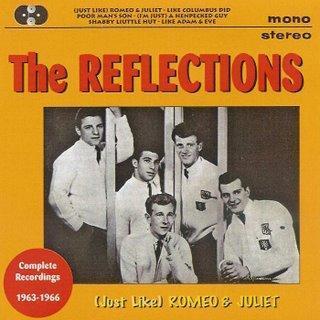
This group of Tony Micale, Phil Castrodale, Dan Bennie, Ray Steinberg and John Dean formed in Detroit, Michigan. They recorded "(Just Like) Romeo and Juliet" on Golden World Records and released the single in 1964. It reached #6. Steinberg left the group shortly afterwards but the group kept recording and appearing on television.
But despite 12 single releases, they only enjoyed one big hit.
This durable Southern U.S. band finally struck it big with their one big song in 1977:
#271: Marshall Tucker Band--"Heard It In A Love Song"
This group formed in Spartanburg, South Carolina in 1972 with lead guitarist, vocalist and songwriter Toy Caldwell, vocalist Doug Gray, keyboardist, saxophone player and flautist Jerry Eubanks, rhythm guitarist George McCorkle, drummer Paul Riddle and bassist Tommy Caldwell. The original members of the band have been playing together in various lineups under different band names since the early 1960's.
The group signed with Capricorn Records and released their self-titled debut album in 1973. The single "Can't You See" was released and then re-released in 1977, but never got higher than #75. The Marshall Tucker Band began touring, playing over 300 shows per year throughout the decade.
The group began to attract a following and enjoyed several gold albums. "Fire on the Mountain" peaked at #38 in 1974. Early albums included contributions from Charlie Daniels and Elvin Bishop.
In 1977, the group released the album Carolina Dreams, which included "Heard It In a Love Song". The single reached #14 and helped the group score their first platinum album.
The Marshall Tucker Band has been one of the most persistent and enduring of the One-Hit Wonders, performing under various lineups for over 40 years. They have released 23 albums and 27 singles, but only one, their One-Hit Wonder, reached the Top 20.
Marshall Tucker takes us to the end of today's segment. Be sure to catch us tomorrow!