Saturday, April 14, 2012

This Date in Rock Music History: April 15

506343_ADT Home Security Starting At $99!
1956:  Elvis Presley appeared at the Municipal Auditorium in San Antonio, Texas.
1958:  Buddy Holly's Fender Stratocaster guitar was stolen while the group was having lunch prior to a concert in St. Louis, Missouri.

1959:  Bobby Darin released the single "Dream Lover".
1960:  The Dick Clark movie Because They're Young, featuring James Darren and Duane Eddy, opens in New York.
1964:  After a long day of filming for their first movie Beatlemania! Ringo Starr says "It's been a hard day's night".  John Lennon begins writing lyrics to that title and the phrase becomes the eventual title of the movie.

1966:  Buffalo Springfield appeared in concert for the first time, opening for the Byrds in San Bernadino, California.
1966:  Jimi Hendrix, Cat Stevens, the Walker Brothers and Engelbert Humperdinck appeared together at The Odeon.
1967:  Aretha Franklin prevailed for a fourth week at #1 on the R&B chart with "I Never Loved a Man (The Way I Love You)".

1967:  Nancy and Frank Sinatra teamed for a new #1 "Somethin' Stupid".  That replaced the Turtles' classic "Happy Together".  The remainder of the Top Ten:  "This Is My Song" From Petula Clark at #3, "Bernadette" from the Four Tops at #4, the Monkees had #5 with "A Little Bit Me, a Little Bit You", "Western Union" from the Five Americans was song #6, Tommy James & the Shondells had #7 with "I Think We're Alone Now", the Mamas & Papas came in at 8 with "Dedicated to the One I Love", Aretha Franklin moved into the Top Ten with "I Never Loved a Man (The Way I Love You)" and "Jimmy Mack" from Martha & the Vandellas rounded out the Top Ten.
1967:  "Somethin' Stupid" was in the third of nine weeks at #1 on the Adult Contemporary chart.

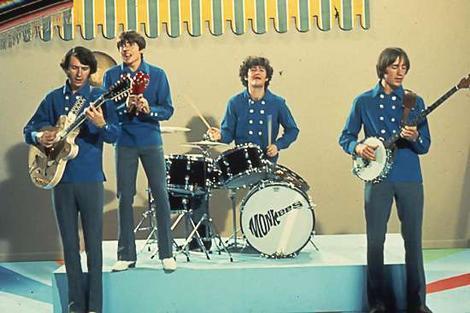
1967:  The Monkees spent a 26th week at #1 on the album chart, 16 of them thanks to their debut album and another 10 with their follow-up, More of the Monkees.  That is far and away the Rock Era record, with Fleetwood Mac a distant second with 19 consecutive weeks at #1, all with Rumours.
1968:  Aretha Franklin recorded "Think".

1968:  Spanky & Our Gang released the single "Like to Get to Know You".
1969:  Archie Bell of the Drells was released from the military after serving in Vietnam.
1971:  The Beatles won the Oscar for Best Film Score for Let It Be.
1972:  "In the Rain", one of The Top 100 R&B Songs of the 1970's* from the Dramatics, spent a fourth week at #1.

        The Stylistics charmed their way into the Top 10...

  1972:  Roberta Flack began a six-week assault on the singles chart with her #1 "The First Time Ever I Saw Your Face".  That replaced America's "A Horse With No Name" which had enjoyed a three-week stay at the top.  "I Gotcha'" from Joe Tex was #3, followed by "Rockin' Robin" from Michael Jackson, Neil Young's former #1 "Heart of Gold" at #5, "In the Rain" from the Dramatics moving up to #6, "Puppy Love" by Donny Osmond, the Stylistics jumped into the top ten with "Betcha By Golly, Wow" at #8, Aretha Franklin had #9 with "Day Dreaming" and Sonny & Cher came in at #10 with "A Cowboy's Work Is Never Done".
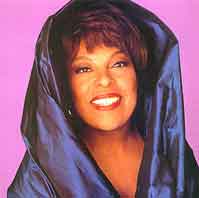
1972:  "The First Time Ever I Saw Your Face" spent a third week atop the Adult Contemporary chart.

1974:  Paul McCartney & Wings released one of the great singles of Paul's career--"Band on the Run".
1975:  Kiss and Rush were in concert at the Stanley Theater in Pittsburgh, Pennsylvania.
1978:  One duo (Johnny Mathis & Deniece Williams with their song "Too Much, Too Little, Too Late") took over from another (Roberta Flack & Donny Hathaway with "The Closer I Get to You") on the R&B chart.
1978:  Dan & Coley held down #1 on the Adult Contemporary chart with "We'll Never Have to Say Goodbye Again" for the fourth week in a row.

     Flack & Hathaway teamed up for this soul gem. 

  1978:  A song written by the Bee Gees (in this case their own "Night Fever" was at #1 for the 11th consecutive week of what would be 15 weeks in a row for the trio.  The rest of the Top Ten--The Bee Gees' former #1 "Stayin' Alive" at #2, "Lay Down Sally" by Eric Clapton, Barry Manilow at #4 with "Can't Smile Without You", Yvonne Elliman remaining at 5 with "If I Can't Have You", Kansas appeared to have a big hit with "Dust in the Wind", Roberta Flack & Donny Hathaway jumped from 13-7 with "The Closer I Get To You", Raydio had #8 with "Jack and Jill", England Dan & John Ford Coley moved into the top ten with "We'll Never Have To Say Goodbye Again" and Natalie Cole scored a top 10 with "Our Love".
1978:  The Soundtrack to "Saturday Night Fever" continued to set the pace on the album chart for the 13th straight week.
1982:  Billy Joel was seriously injured in a motorcycle accident on Long Island, New York when a car ran a red light.  Joel was hospitalized for over a month.  

1984:  Kenny Loggins had the top song in the land for a third week with "Footloose".  Phil Collins was making a move with "Against All Odds" while Rockwell was going the wrong way, down to #3 with "Somebody's Watching Me".  Lionel Richie appeared destined for the top with "Hello", moving from 10-4.  The rest of the Top Ten:  the Pointers had #5 with "Automatic", Culture Club was at 6 with "Miss Me Blind", the Eurythmics slipped to 7 with "Here Comes the Rain Again", the Thompson Twins had a top ten song with "Hold Me Now", Hall & Oates slipped to #9 with "Adult Education" and Van Halen's former #1 "Jump" was at 10.
1984:  Lionel Richie spent a second of six weeks at #1 on the Adult Contemporary chart with "Hello".
1985:  Bryan Adams released the single "Heaven".
1985:  Bruce Springsteen appeared before a sold-out crowd for the fourth of five concerts at Yoyogi Olympic Pool in Tokyo, Japan as part of his Born in the U.S.A. tour.

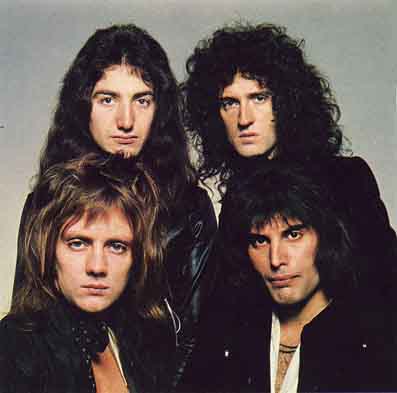
1987:  Queen was presented with an award for Outstanding Contribution to British Music at the Ivor Novello Awards Show in London.
1988:  Pink Floyd began a North American tour at the Memorial Coliseum in Los Angeles.
1989:  The Fine Young Cannibals overtook Roxette (which slipped to #2) at #1 with "She Drives Me Crazy".  The rest of the Top Five:  "Like a Prayer" from Madonna at #3, "Eternal Flame" by the Bangles, and "Girl You Know It's True" by Milli Vanilli had #5, just another clue that the quality of music was slipping.
1989:  "Eternal Flame" was #1 on the Adult Contemporary chart for a second straight week.
1989:  Tone Loc hit #1 on the album chart with Loc-ed After Dark.
1
989:  "You Got It", which was to be the comeback song for Roy Orbison produced by fellow Traveling WIlbury member Jeff Lynne, reached the Top 10 four months after Orbison's death of a heart attack.

1991:  Michael Bolton released the single "Love is a Wonderful Thing".
1992:  Queen reunited for a concert dedicated to lead singer Freddie Mercury, who had died from AIDS six months previously.  Elton John, George Michael, Guns N' Roses, Annie Lennox, Robert Plant, Roger Daltrey, David Bowie and Paul Young join the remaining members in the tribute concert.
1995:  Montell Jordan remained at #1 for a third week on the R&B chart with "This Is How We Do It".

1996:  The remaining ashes of Jerry Garcia were scattered near the Golden Gate Bridge in San Francisco, California.  He had requested a small portion of the ashes to be scattered in the Ganges River in India on April 4.
1999:  Entropy starring U2 premiered at the Los Angeles Independent Film Festival.
2005:  John Fred Gourrier (John Fred and his Playboy Band) died at age 63 after being hospitalized with kidney problems.
2007:  Aerosmith, Velvet Revolver and Evanescence appeared in concert at the Quilmes Rock Festival at River Stadium in Argentina.


Born This Day:
1937:  Bob Luman ("Let's Think About Livin'" from 1969) was born in Nacogdoches, Texas; died fron pneumonia in Nashville, Tennessee December 27, 1978.
1940:  Clarence Satchell of the Ohio Players; died on December 30, 1995 of a brain aneurysm.
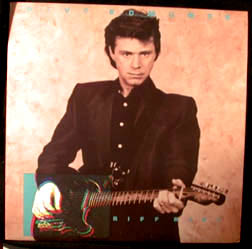
1944:  Dave Edmunds ("I Hear You Knocking"), who also produced albums by Brinsley Schwarz and the Stray Cats was born in Cardiff, Wales. 

1947:  Mike Chapman, famed songwriter and producer who created hits for Suzi Quatro and Sweet and produced Blondie and the Knack, was born in Nambour, Queensland, Australia.

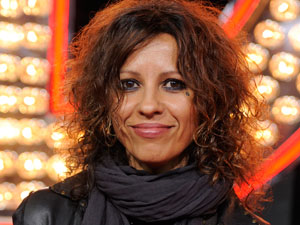
1965:  Linda Perry of 4 Non Blondes ("What's Going On?"), and an accomplished songwriter and producer ("Get the Party Started" for Pink, "Beautiful" for Christina Aguilera and Gwen Stefani "What You Waiting For?"),  was born in Springfield, Massachusetts.
1966:  Graeme Clark, bass guitarist of Wet, Wet, Wet (remake of "Love Is All Around")
1966:  Samantha Fox was born in London.
1967:  Frankie Poullain, bassist of the Darkness, was born in Edinburgh, Scotland.
1968:  Ed O'Brien, songwriter and guitarist of Radiohead, was born in Oxford, England.
>

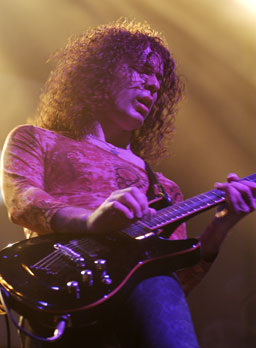
The #27 Guitarist of the Rock Era: Marty Friedman

#27 is a master of the guitar, known for fast playing and great, melodic solos:
#27:  Marty Friedman, Cacophony, Megadeth, Solo
32 years as an active guitarist


Martin Adam "Marty" Friedman was born December 8, 1962.  He was the lead and rhythm guitarist for Megadeth for nearly a decade.  
 

Friedman has had some guitar lessons but is basically self-taught.  He was inspired by Queen, Kiss, Black Sabbath and the Ramones.  Marty played in several groups while starting out, most notably Cacophony.  Together with Jason Becker, whom we've already heard in The Top 100 Guitarists*, the two played synchronized guitar harmonies.  
 

After the breakup of Cacophony in 1989, Friedman tried out for the band Megadeth.  He officially joined the band in February of 1990 and recorded on the album Rust in Peace, which was certified Platinum.  Marty brought the same exotic scale solos he had played with Cacophony to Megadeth.  In 1992, the group released Countdown to Extinction, which reached Double Platinum status.  Friedman and Megadeth released Youthanasia in 1994, Cryptic Writings in 1997 and Risk in 1999 before Marty left the group after a show in early 2000.  While Friedman was the lead guitarist, Megadeth sold ten million albums worldwide.


Friedman has played guitar for several other artists, and released a solo album, Loudspeaker in 2006, that was among his best.  Friedman has founded a new band called Lovefixer.  His most recent album was Tokyo Jukebox 2 released in 2011.

Friedman is a great improviser and will often play arpeggiated chords and various customized scales and occassionally employ sweep picking.  Marty frequently uses the upstroke as opposed to the down stroke, making his solos unique and difficult to replicate using a different picking approach.
 

While with Cacophony, Friedman played Hurricane guitars, then switched to Carvin, favoring the V220M model.  He also used Carvin and Hurricane guitars on his first solo album Dragon's Kiss.  After joining Megadeth, Marty switched to Jackson Guitars with the Jackson Kelly.  The KE1's were Friedman's signature models with poplar bodies and a single Seymour Duncan JB pickup and a Kahler Fine-tuning fixed bridge.  He also used the Rhoads and the Roswell Rhoads.  In 2000, Marty endorsed Ibanez and produced a signature model called the MFM.  He since has played PRS Guitars, using both the Singlecut and Tremonti.  


When Friedman joined Megadeth, he used a Bogner Triple Giant amplifier and a Tube Works for solos, along with a VHT 2150 power amp.  He used Custom Audio Electronics 3+ Preamps and VHT 2150's on the next two albums, before switching to Crate Amplifiers (the Blue Voodoo and ENGL).  Marty uses Special Edition heads and ENGL vintage cabinets.
 

Friedman employs several guitar effects, including the GS-10, ST-2 Power Stack, the AC-2 Acoustic Simulator, the PS-6 Harmonist, the NS-2 Noise Suppressor and DD-5 Digital Delay from Boss, the MAXON Auto Filter and the Tech 21 SansAmp GT-2.


We are well within the cream of the crop now.  Marty Friedman ranks #27 for the Rock Era*...

Friday, April 13, 2012

This Date in Rock Music History: April 14

575560_468x60 Full Banner - Save Up to 80% on FranklinCovey's Clearance Items
1956:  Bobby Helms ("Jingle Bell Rock") signed with Decca Records.
1958:  The Champs celebrated a third week at #1 on the R&B chart with "Tequila".
1962:  "Johnny Angel" spent a second week at #1 on this date; it was the big hit for Shelley Fabares.
1963:  The Beatles met the Rolling Stones after the latter gave a concert in Richmond, England.
Millie Small
1965:  Millie Small sang her hit "My Boy Lollipop" on the television show Shindig!.
1965:  The movie Girl Happy starring Elvis Presley opened in theaters.
1966:  The Beatles recorded "Paperback Writer".
1966:  The Spencer Davis Group was at #1 in the UK with "Somebody Help Me".
1966:  Roy Orbison, the Walker Brothers and Lulu performed at the Colston Hall in Bristol, England.

1967:  The Bee Gees released the single "New York Mining Disaster 1941".


1967:  The final episode of Where the Action Is starring Paul Revere & the Raiders aired on ABC-TV.
1969:  The 33 1/3 Revolutions Per Monkee special aired on NBC-TV.
1969:  The Beatles recorded "The Ballad of John and Yoko".
1969:  Barbra Streisand (Funny Girl) tied Katherine Hepburn (The Lion In Winter) for Best Actress at the Academy Awards.
1970:  CCR made their live debut in the UK at the Royal Albert Hall in London.
1970:  Stephen Stills broke his wrist in a car accident.

1973:  The man had a style all his own, and we loved him for it.  On this date, we were introduced to Barry White, as his first career single, "I'm Gonna' Love Just a Little More, Baby", debuted on the chart.
1973:  Led Zeppelin moved into #1 on the UK album chart with Houses of the Holy.
1973:  Diana Ross had the #1 album with the Soundtrack to "Lady Sings the Blues".


       War had themselves a Top 10 with "The Cisco Kid"


1973:  "The Night the Lights Went Out in Georgia" by Vicki Lawrence was #1 for the second week in a row.  Gladys Knight & the Pips once again were at #2 with "Neither One Of Us (Wants to Be the First to Say Goodbye)".  The rest of the Top Ten as long titles were the order of the day--#3 "Tie A Yellow Ribbon Round the Ole Oak Tree" by Dawn, #4 was "Ain't No Woman (Like the One I've Got)" by the Four Tops, the Carpenters moved into position #5 with "Sing", War had #6 with "The Cisco Kid", Anne Murray was at 7 with "Danny's Song", the Stylistics slipped to #8 with "Break Up to Make Up", Roberta Flack's former #1 "Killing Me Softly With His Song was at #9 and Al Green cracked the top ten with "Call Me (Come Back Home)". 
1973:  "Tie a Yellow Ribbon 'Round the Ole Oak Tree" by Tony Orlando & Dawn was #1 for the second week in a row on the Adult Contemporary chart.

1975:  Art Garfunkel began a six-week run at #1 in the UK with his beautiful song "Bright Eyes" from the movie Watership Down.  It would go on to become the biggest selling single of the year.  In the U.S., it has to settle for being one of The Top Unknown/Underrated Songs of the Rock Era.
1975:  The Rolling Stones announced that singer/guitarist Ron Wood would join them for their upcoming tour.
1976:  Stevie Wonder signed a $13 million deal with Motown Records.

      "Surrender" helped introduce us to Cheap Trick...

1979:  The Dobbie Brothers had the top album with Minute By Minute.  The self-titled Dire Straits was second, switching places with Spirits Having Flown from the Bee Gees.  2 Hot!  from a new Peaches & Herb was fourth.  The rest of the Top 10:  Blondes Have More Fun from Rod Stewart, Gloria Gaynor with Love Tracks, Bad Company moved up to #7 with Desolation Angels, George Benson with Livin' Inside Your Love, the Allman Brothers Band were back with Enlightened Rouges and Cheap Trick found the Top 10 with their breakthrough album, Cheap Trick Live At Budokan.
1979:  "Crazy Love" by Poco spent a sixth of seven weeks it would reign as #1 on the Adult Contemporary chart.  It was one of the top AC hits of the decade.

1979:  The Doobie Brothers took over at #1 on the Hot 100 with the first career #1--"What a Fool Believes".  Gloria Gaynor's former #1 "I Will Survive" was at 2, Amii Stewart moved up to #3 with "Knock On Wood", the debut from Dire Straits "Sultans of Swing" was at #4 and Frank Mills' catchy instrumental "Music Box Dancer" moved into the top five.  The rest of the Top 10:  The Bee Gees were at #6 with their former #1 "Tragedy", Peaches & Herb were headed that way, going from 15-7 with "Reunited", Blondie had song #8 with "Heart of Glass", Suzi Quatro & Chris Norman had a top ten record with "Stumblin' In" and the Little River Band was at #10 with "Lady".
1980:  Iron Maiden released their debut album.
1980:  Pete Townshend released his very good solo album Empty Glass.
1980:  Gary Numan released The Touring Principle, the first rock videocassette available for purchase.

1980:  A bill was introduced in the New Jersey state assembly to make "Born to Run" by Bruce Springsteen the official state song.
1983:  Pete Farndon of the Pretenders died from drugs at the age of 29.  Farndon had been fired from the group one year earlier because of his addiction.  Yet he hadn't learned.
1984:  "Hello" by Lionel Richie led the way on the Adult Contemporary chart for the second out of an eventual six weeks at #1.

1984:  Thriller by Michael Jackson topped the album chart for the 37th week, a record that still stands.  The "Footloose" Soundtrack was second with 1984 from Van Halen and Can't Slow Down from Lionel Richie right behind.  Huey Lewis & the News completed a great Top five with Sports.  The rest of the Top 10:  Culture Club with Colour By Numbers, the Euthmics' album Touch, the Scorpions crawled in at #8 with Love At First Sting, the Pretenders' amazing album Learning to Crawl at #9 and Cyndi Lauper remained 10th with She's So Unusual.
1989:  Tom Petty released his first solo album Full Moon Fever.
1990:  Thurston Harris ("Little Bitty Pretty One" from 1957) died of a heart attack at the age of 59.
1990:  Madonna had the #1 song in the UK with "Vogue".
1990:  Tommy Page had his first and only #1 with "I'll Be Your Everything".  Jane Child was at 2 with "Don't Wanna' Fall in Love", Lisa Stansfield remained at #3 with "All Around the World", Sinead O'Connor was headed for the top with "Nothing Compares 2 U" and Taylor Dayne fell from #1 to #5 with "Love Will Lead You Back".

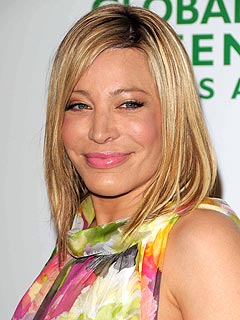
 Dayne ruled the AC chart


1990:  Taylor Dayne spent a fourth week at #1 on the Adult Contemporary chart with "Love Will Lead You Back".
1993:  Paul McCartney began a 24-date tour of North America at the Sam Boys Silver Bowl in Las Vegas.
1995:  Burl Ives ("Holly Jolly Christmas") died of cancer of the mouth at the age of 85.
2002:  Phil Selway of Radiohead ran in the London Marathon, raising $25,000 for the Samaritans.
2004:  Sophie B. Hawkins ("As I Lay Me Down") won a lawsuit against a man selling pirated copies of her new album Wilderness.
2004:  Usher was on top of the album chart for the third week in a row with Confessions.
2006:  The Beatles announced they would digitally remaster their back catalog and sell the music online.
2008:  Brian May, elite guitarist for Queen, was named chancellor of John Moore University in Liverpool, England.
2009:  George Harrison was recognized with a posthumous star (Why don't they ever do these things on time?) on the Hollywood Walk of Fame in Los Angeles.  Sir Paul McCartney was there to witness the event, joining Olivia Harrison and son Dhani.  Oscar-winning actor Tom Hanks and Tom Petty also were on hand.


Born This Day:
1942:  Tony Burrows, who sang lead for Edison Lighthouse, White Plains, the Pipkins and Brotherhood of Man (all four groups were in the British Top Ten at once in 1970), was born in Exeter, Devon, England.
1944:  Michael Brewer of Brewer & Shipley ("One Toke Over the Line") was born in Oklahoma City, Oklahoma.

1945:  Ritchie Blackmore, elite guitarist of Deep Purple, Rainbow and Blackmore's Night, was born in Weston-suepr Mare, Somerset, England.  
1946:  Patrick Fairley of Marmalade ("Reflections of My Life")
1948:  Larry Ferguson, keyboardist of Hot Chocolate
1949:  Dennis Bryon of Amen Corner, who worked with the Bee Gees in the 70's and 80's
1949:  June Millington of the group Fanny ("Butter Boy" from 1975)
1962:  Joey Pesce of 'Til Tuesday ("Voices Carry")
1974:  Shawntae Harris (Da Brat) was born in Joliet, Illinois.

The #28 Guitarist of the Rock Era: Glenn Tipton

We are 72 guitarists in, 28 more to go.  We have another genius on the guitar, technically skilled and super fast:
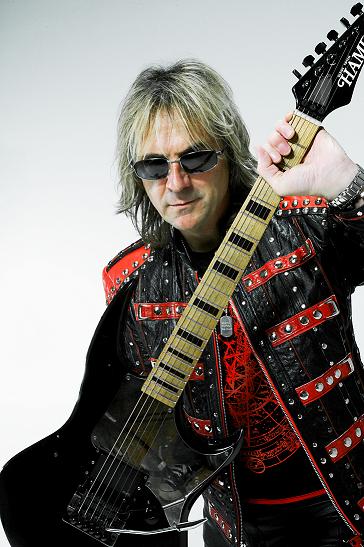
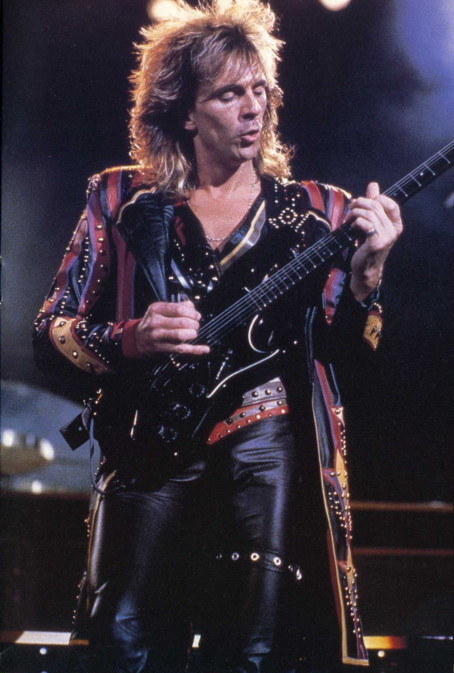
#28:  Glenn Tipton
45 years as an active guitarist

Glenn Raymond Tipton was born October 25, 1947 in Blackheath, England.  Tipton has been featured as one of two lead guitarists for the heavy metal group Judas Priest.
 

Tipton's brother, Gary, played guitar in a band called the Atlantics.  Glenn was taught to play piano by his mother but did not learn to play guitar until age 19.  His first guitar was a Hofner acoustic.  Glenn's first group was called Shave Em' Dry, which became Merlin, which changed their name to the Flying Hat Band.  After that group broke up, Tipton joined Judas Priest in May of 1974.  The group was recording the album RockaRolla, and Tipton added his guitar parts.


Glenn wrote several songs on the album Sad Wings of Destiny and his guitar work is displayed on "Tyrant", "Dreamer Deceiver" and "Victim of Changes".  The album British Steel in 1980 was Judas Priest's breakthrough.  The group continued to flourish with the albums Point of Entry, Screaming for Vengeance, Defenders of the Faith, Turbo, Ram it Down and Painkiller.  


After lead singer Rob Halford left in 1992 the band split, but returned with Tim "Ripper" Owens in 1997.  With the lineup, Judas Priest recorded Jugulator and Demolition.  Tipton also released his first solo album Baptizm of Fire in 1997.  A second Tipton album, Edge of the World, was released in 2006.
 

Halford rejoined the group in 2003 and they released Angel of Retribution in 2005 and Nostradamus in 2008.  In 2010, Judas Priest went on the Epitaph World Tour.


As Tipton gained experience, his solos became more complex and in some, you can hear a classical influence.  They are technically accurate and aggressive, yet melodic, making use of harmonic minor scales, pentatonic scales and sweep-picking arpeggios, legato picking, tremolo/alternate picking, hammer-ons and pull-offs.  In 1978, Tipton began to use tapping into his playing.  Glenn's style uses blues-based phrasing with medium vibrato.  Tipton's is a warmer tone with more bass.  


Tipton has been influenced by early blues players as well as the Spencer Davis Group.  He also listened to the Beatles, Jimi Hendrix, Led Zeppelin, the Rolling Stones and Deep Purple and was influenced by the guitar playing of Peter Green and Jeremy Spencer in Fleetwood Mac and Rory Gallagher. 
 

Tipton began his career playing a 1960's Fender Stratocaster until 1978.  He then started using a black Gibson Les Paul Custom and a modified Fender Stratocaster with DiMarzio Super Distortion humbucking pickups.  He also added a Gibson SG Special with a chrome pickguard and stock PAF humbucers.  In 1984, Tipton switched to a Hamer Phantom GT and a signature model of this was developed and sold in the mid-1980's.  Glenn also has a Fender Telecaster that he uses in the studio, an ESP Eclipse acoustic, an Ibanez 7621 seven-string, a Gibson Explorer and a Roland G-707 synth guitar.


Tipton has used Marshall Amplifiers throughout his career.  He has employed Regular Vintage 50 (with EL34 output tubes and a Range Master Treble Boost) and 100, then used the JCM 800 head when it came out in 1982.  Later, Tipton was endorsed by Crate amps (he used Crate heads and cabinets) and he used Rocktron preamps.  Then he switched to a large rack with multiple preamps and a Marshall 9100 power amp.  In 2008, Glenn began using ENGL amps:  the Preamp E580, the Poweramp 850/50 and the ENGL Invader.


In the early part of his career with Judas Priest, Tipton used a Peter Cornish custom pedalboard with an overdrive unit, flanger, MXR distortion unit, MXR Phase 100, MXS digital delay, MXR 12-band EQ, the Maestro Echoplex, line boosters between each effect to preserve the signal, and a Rangemaster-based treble boost connected to the bass channel of his Marshall amp.  About the time Halford reunited with the group, Tipton only used a Crybaby 535Q Wah, Digitech Tone Driver, DigiTech Main Squeeze and a Yamaha midi board controlling other effects in a rack unit.


Tipton currently uses a rack system with a Korg rack tuner, Furman power unit, Donlop Rackmounted Crybaby, Rocktron Intellifex and Yamaha XPS-90 multi-effects units and a dbx 166A compressor and noise gate.
 

Tipton was ranked #19 on the Hit Parader list of 100 greatest metal guitarists, a more genre-tailored list than Inside the Rock Era.  Kerry King credits Tipton as a great guitar influence and has said he one of rock's most underrated guitarists.  Of course that was before we came out with this list.  Glenn Tipton ranks #28 for the Rock Era*...

Thursday, April 12, 2012

This Date in Rock Music History: April 13

10% off #5
1959:  The Fleetwoods had the #1 song with "Come Softly to Me".
1962:  The Beatles began performing at the Star Club in Hamburg, Germany.  The band would play 3-4 hours a night for 48 days with one day off. 
1963:  Andy Williams grabbed the #1 spot on the Easy Listening chart with "Can't Get Used to Losing You".
1963:  The Chiffons spent their third of four weeks at #1 with "He's So Fine".  Ruby & the Romantics were at #2 with "Our Day Will Come".  The rest of the Top Five--"The End of the World" by Skeeter Davis remained at #3, the Orlons had #4 with "South Street" and Andy Williams shot up from 18 to 5 with "Can't Get Used To Losing You".
1964:  Bobby Darin is nominated for but does not win Best Supporting Actor at the Academy Awards for Captain Newman, M.D.
1965:  The Beatles recorded "Help!" at Abbey Road Studios in London.

    Getz & Gilberto were awarded Record of the Year...

1965:  Roger Miller won five awards at the Grammy Awards.  Stan Getz and Joao Gilberto captured Record of the Year ("The Girl From Ipanema") and Album of the Year (Getz/Gilberto).  The Beatles took home the award for Best New Artist and Best Performance by a Group for "A Hard Day's Night".
1967:  The Rolling Stones appear in concert behind the old Iron Curtain at the Palace of Culture in Warsaw, Poland.

1968:  This was one of the best years in music and Bobby Goldsboro's classic "Honey" was one of the reasons why.  It moved from 10 to 1 to sit atop the charts on this date 43 years ago.  That represents the seventh-biggest jump to #1 in Billboard chart history.  "Young Girl" by Gary Puckett and the Union Gap was #2 and the former #1 (Sittin' On) The Dock of the Bay" by Otis Redding slipped to 3.  The remainder of the Top Ten:  The Box Tops had #4 with "Cry Like a Baby", Aretha Franklin held down #5 with "(Sweet Sweet Baby) Since You've Been Gone", the Beatles were at 6 with "Lady Madonna", Georgie Fame had #7 with "The Ballad of Bonnie and Clyde", the Delfonics were at #8 with "La-La-Means I Love You", the Monkees slipped to 9 with "Valleri" and Manfred Mann moved into the top ten with "The Mighty Quinn (Quinn the Eskimo)".
1968:  "Love is Blue" topped the Adult Contemporary chart for a ninth week in a row.
1969:  Diana Ross appeared without the Supremes on the Dinah Shore show Like Hep.
1970:  Genesis appeared at Friars in Aylesbury, England.
1970:  Led Zeppelin became the first act to sell out the Montreal Forum.
1971:  The Rolling Stones released "Brown Sugar", the first 45 from their new Rolling Stones Records.
1973:  Roger Daltrey released the solo album Daltrey.

1974:  Paul McCartney & Wings had the #1 album with Band on the Run.  John Denver's Greatest Hits slipped to second with Mike Oldfield's Tubular Bells lining up to take #3.  Joni Mitchell was fourth with Court and Spark.  The rest of the Top 10:  Love Is the Message from MFSB, Elton John was still in the Top 10 with Goodbye Yellow Brick Road, Barbra Streisand's The Way We Were, the Soundtrack to "The Sting" from Marvin Hamlisch moved to #8, the Doobie Brothers cracked the Top 10 with What Were Once Vices Are Now Habits and Burn by Deep Purple was #10.
1974:  Elton John scored another #1 with "Bennie and the Jets" on this date 37 years ago.  Blue Swede fell to #2 with "Hooked On a Feeling" after a week at the top.  MFSB was at #8 with "TSOP", Sister Janet Mead moved "The Lord's Prayer" to #4, Redbone had #5 with "Come and Get Your Love", John Denver was at 6 with his former #1 "Sunshine on My Shoulders", Gladys Knight & the Pips were at #7 with "Best Thing That Ever Happened To Me", Terry Jacks fell to #8 with his former #1 "Seasons in the Sun", Ringo Starr moved into the top ten with "Oh My My" and Carly Simon & James Taylor had song #10 with "Mockingbird".

1975:  The Captain & Tennille released the single "Love Will Keep Us Together".
1975:  Van McCoy released the single "The Hustle".
1978:  The Supremes (without Diana Ross) played the first of three nights at the Palladium in London.
1979:  Just five nights into Van Halen's tour, lead singer David Lee Roth collapsed on state from exhaustion at the Spokane Coliseum.  

1980.  Grease closed on Broadway after 3,883 performances and $8 million in ticket revenue.
1985:  Phil Collins had the top album for a third week with No Jacket Required.

1985:  USA for Africa rose to #1 with "We Are the World"--it would stay there for four weeks.  The rest of the Top Ten--#2 was "One More Night" by Phil Collins, Maddona at 3 with "Crazy For You", the Commodores without Lionel Richie were at #4 with "Nightshift", Madonna slipped to #5 with "Material Girl", Bruce Springsteen was climbing up with "I'm On Fire", DeBarge had #7 with "Rhythm of the Night", "Lovergirl" by Teena Marie was #8, Animotion had a fast-rising "Obsession" at #9 and Diana Ross moved into the top ten with "Missing You".
1985:  "One More Night" spent one more week at #1 on the Adult Contemporary chart for Phil Collins.

1986:  Heart released the single "Nothin' At All".


1991:  Londonbeat moved into the #1 slot with their great song "I've Been Thinking About You".  Wilson Phillips used their harmonies to hold down #2 with "You're In Love".  Tara Kemp had song #3 with "Hold You Tight", Amy Grant was moving towards the top with "Baby Baby" and Enigma had "Sadeness Part 1" at #5.

1991:  Wilson Phillips spent their third of four weeks at #1 on the Adult Contemporary chart with "You're In Love".
1993:  The first "Aerosmith Day" was observed in Massachusetts after the Boston band was given its own holiday.
1994:  Billy Joel and Christie Brinkley announced their separation.

1996:  Celine Dion remained at #1 for the fourth week with "Because You Loved Me".  Mariah Carey had #2 with "Always Be My Baby", Tony Rich Project remained third with "Nobody Knows" and Alanis Morissette moved up with "Ironic".
1996:  The album Jagged Little Pill by Alanis Morissette wasn't done in its amazing run on the album chart.  It moved back to #1 for the fourth time and a seventh week.  

1997:  The Verve Pipe released the single "The Freshman".
2000:  Gavin Rossdale of Bush collapsed at the end of a show in Los Angeles.
2003:  The Beatles' Apple Corporation was listed as the fastest-growing firm in Britain with a growth rate of 194%.

2005:  Switchfoot won four awards, including Artist of the Year, at the Gospel Music Association Awards.
2005:  Johnnie Johnson, keyboardist with Chuck Berry died; he was the inspiration for the standard "Johnny B. Goode".
2009:  Phil Spector, producer and creator of the "Wall of Sound", was found guilty of second-degree murder in the 2003 shooting of actress Lana Clarkson in Spector's home.

Born This Day:
1936:  Tim Field of the Springfields ("Silver Threads and Golden Needles")
1940:  Lester Chambers, lead singer of the Chambers Brothers ("Time Has Come Today" from 1968) 
1942:  Bill Conti (the "other" theme from Rocky) was born in Providence, Rhode Island.
1943:  Eve Graham of the New Seekers (I'd Like to Teach the World to Sing") was born in Auchterarder, Scotland.  
1944:  Jack Casady, elite bass guitarist of Jefferson Airplane and Hot Tuna, was born in Washington, D.C.
1945:  Lowell George, singer-songwriter, multi-instrumentalist and producer of Little Feat was born in Hollywood, California; died from drugs June 29, 1979. 
1946:  Soul great Al Green, was born in Forrest City, Arkansas.
1951:  Max Weinberg of the E Street Band, was born in Newark, New Jersey.
1954:  Jimmy Destri, the keyboardist with Blondie, was born in Brooklyn, New York.

1955:  Louis Johnson of the Brothers Johnson, was born in Los Angeles.
1957:  Wayne Lewis of Atlantic Starr ("Always")
1961:  Butch Taylor, keyboardist for the Dave Matthews Band, was born in Shawsville, Virginia.
1962:  Hillel Slovak, original guitarist for the Red Hot Chili Peppers, was born in Haifa, Israel; died from heroin on June 27th, 1988.
1966:  Marc Ford, lead guitarist of the Black Crowes, was born in Los Angeles.
1972:  Aaron Lewis, lead vocalist, founding member and rhythm guitarist with Staind, was born in Rutland, Vermont.
1975:  Lou Bega ("Mambo No. 5" from 1999) was born in Munich, West Germany.

The #29 Guitarist of the Rock Era: Pete Townshend

We are up to #29 now, another of the legends on the guitar:
#29:  Pete Townshend, Who, solo
51 years as an active guitarist


Peter Dennis Blandford "Pete" Townshend was born May 19, 1945 in London.  He was the founder, chief songwriter and lead guitarist for the group the Who.  Townshend became famous for his live "full wind up" strokes of the guitar, which became known as the "windmill".
 

Townshend was born into a musical family as his father Cliff was a saxophonist with the Squadronaires and his mother was a singer.  Pete showed an interest in rock & roll at an early age, becoming fascinated with the 1956 movie Rock Around the Clock.  His grandmother gave him his first guitar at age 12.  Townshend's early influences were Bo Diddley, Link Wray, John Lee Hooker and Hank Marvin.  Then he started listening to "Green Onions" and other songs by Booker T. & the MG's and he knew he wanted to be a guitarist.


In 1961, Townshend enrolled at Ealing Art College to study graphic arts.  A year later, he and friend John Entwistle foundered their first group, the Confederates, with Pete playing banjo and Entwistle playing horns.  The duo then recruited another former schoolmate, Roger Daltrey, to sing lead in a skiffle group called the Detours.  In 1964, the group found that another band had named themselves the Detours so Pete's group changed their name to the Who.  Drummer Doug Sandom was soon replaced by Keith Moon.  
 

The group had a good local following but needed something to set themselves apart in the busy London music scene of the mid-60's.  In September 1964, while performing at the Railway Tavern, Townshend accidentally broke the head of his guitar through the low ceiling.  When the audience began to snicker, Townshend smashed the instrument on stage.  He picked up another and did the same to it.  


A large crowd attended the next show.  Townshend did not smash another guitar (they were, after all, just starting out...) but Moon wrecked his drum kit.  The band had found their "gimmick" and destruction of instruments became a staple of Who concerts for years to come.  


Townshend was the primary songwriter and the driving creative force behind the band.  The Who's first single was "I Can't Explain" in 1965, which became a Top 10 hit in the U.K.  The Who's debut album My Generation (The Who Sings My Generation in the U.S.) was released later in the year.  It contained the title track "My Generation" and "The Kids Are Alright".  "Substitute", "I'm a Boy", "Happy Jack" and "Pictures of Lily" followed.  In 1967, the group signed with Track Records, where they would stay for nearly a decade. 
 

The group's breakthrough came with the release of The Who Sell Out, a concept album of an offshore radio station, complete with jingles and commercials.  The song that ignited interest was the single "I Can See for Miles".  Largely through the success of this album, the Who was invited to the Monterey Pop Festival, one of the key events of the 1960's.  


The Who smashed their equipment at Monterey, and they did it again on an appearance on The Smothers Brothers television show.  Moon detonated his drum kit, and with an explosion more powerful than anyone expected.  Townshend says to this day that the stunt was the beginning of his tinnitus.


In 1968, the Who headlined the Schaefer Music Festival in New York City's Central Park and released the single "Magic Bus".  Later that year, Townshend announced that he was working on a full-length rock opera, a landmark in modern music.  That rock opera was called Tommy, and it was brilliant.
 

The Who at Woodstock


The Who played much of Tommy at Woodstock in 1969.  They performed "I Can See For Miles" on the BBC show Pop Go the Sixties in January, 1970 and recorded their concert Live at Leeds, thought by many to be one of the best live albums of the Rock Era.  Tour dates to perform Tommy not only included Leeds but European opera houses, as well as the Metropolitan Opera House in New York City, as the Who became the first rock act to perform there.
 

Who's Next was released in 1971, the group's best studio album to date.  It reached #1 in the U.K. and #4 in the United States.  The album features the great tracks "Won't Get Fooled Again" and "Baba O'Riley".  The following year, the Who released "Join Together" and "The Relay".  


In 1973, the group released their second rock opera, Quadrophenia, which reached #2 in both the U.S. and U.K.  This period of their career was definitely the group's peak.  During a concert at the Cow Palace in San Francisco, Moon passed out.
 

In 1974, the outtakes album Odds & Sods was released, followed by The Who by Numbers in 1975.  Both paled by comparison to the group's best work.  The movie Tommy came out that year, starring Daltrey and earning Townshend an Academy Award nomination for Best Original Score.  On December 6, 1975, the Who set the record for the largest indoor concert at the Pontiac Silverdome in Michigan, a concert attended by 75, 962 people.  


In 1978, the group released Who Are You.  Three weeks later, Keith Moon died in his sleep after an overdose of the drug Heminevrin, which was prescribed to combat alcohol withdrawal.  Kenny Jones of Small Faces and Faces was brought in to succeed Moon.
 

The Who returned live in 1979 with shows at the Rainbow Theatre in London, the Cannes Film Festival in France, Wembley Stadium in London and five dates at Madison Square Garden in New York City.  The group released the documentary The Kids Are Alright and the movie version of Quadrophenia.  In December, the Who were featured on the cover of Time magazine.


A tour of the United States was underway in December when tragedy struck.  Fans rushing to get into Riverfront Coliseum in Cincinnati, Ohio caused a stampede that killed 11 and injured 26 others.  


The Who released two studio albums with Jones--Face Dances in 1981 and It's Hard in 1982.  "You Better You Bet" was weak compared to early Who releases, although "Eminence Front" was a popular track.


By this time, Townshend's marriage had fallen apart due to his heavy drinking and heroin use.  The Who embarked on their "farewell" tour in 1982, which was the highest grossing tour of the year.  Although the Who owed Warner Brothers Records another album, Townshend announced he was unable to generate material for the group and left the group in December.  
In July, 1985, the group reformed for a one-time show at the Live Aid concert at Wembley Stadium in London.  In 1988, the Brit Awards honored the Who with the British Phonographic Industry's Lifetime Achievement Award.  In 1989, the Who did a 25th anniversary tour which emphasized shows from Tommy.  The group performed to sellout crowds across North America.


The Who were inducted into the Rock & Roll Hall of Fame in 1990 in their first year of eligibility.
 

In 1996, Townshend, Entwistle and Daltrey performed Quadrophenia with guest stars at a concert in Hyde Park in London.  The success of the show led to a U.S. and European tour in 1996 and 1997.  The Who did shows in 1999, which led to another tour of the United States and the U.K. in 2000.  The group was further honored that year at the Grammys when they were presented with a Lifetime Achievement Award.


The Who performed charity shows in England in 2002, but on Jun 27, right before a tour of the United States was to begin, John Entwistle was found dead in Las Vegas, Nevada from cocaine.  After cancellations, the tour resumed with bassist Pino Palladino as Entwistle's replacement.  The Who also did 18 dates in 2004.


Townshend worked on a mini-opera called Wire & Glass, which he presented at Vassar College.  The Who performed for the Live 8 concert in 2005, then were inducted into the U.K. Music Hall of Fame later in the year.  The Who received the Freddie Mercury Lifetime Achievement Award in Live Music at the Vodafone music awards.
 

In 2006, the Who released Endless Wire, their first studio album in 14 years.  The album debuted at #7 in the United States.  The group toured in 2006-2007 and headlined the Glastonbury Festival.


In 2007, the group released Amazing Journey:  The Story of the Who, which included footage not previously released, such as film from their appearance at Leeds University in 1970.  The documentary was nominated for a 2009 Grammy Award.
 

In 2008, the Who were honored at the Kennedy Center Honors and did a small tour.  A tour of Australia and New Zealand wrapped up in early 2009.  The group performed at halftime of Super Bowl XLIV in Miami, Florida in 2010.  The Who also performed Quadrophenia at Royal Albert Hall in March.  The group performed in London on January 13, 011 for a benefit for cancer.


The Who are one of the most influential artists of the Rock Era, influencing Led Zeppelin, U2, Queen, Rush, Pearl Jam, the Clash and many more.


Townshend's creation, Tommy, was inducted into the Grammy Hall of Fame in 1998, the song "My Generation" in 1999 and Who's Next in 2007.  "My Generation" was selected for preservation into the United States National Recording Registry in 2009.
 
Townshend wrote most of the hit singles for the Who, including "My Generation", "I Can't Explain", "Pictures of Lily" and "Substitute".  His signature guitar move was when he would swing his right arm against the guitar strings in a style that reminded one of the vanes of a windmill.  Townshend was one of the first musicians to smash guitars on stage and it became his trademark.  


The Who continued to be one of The Top Artists of the Rock Era*, and were considered one of the best live acts as well, because of the volume of material, showmanship and high-energy performances.  The Who have sold 100 million records, have charted 27 Top 40 songs in the U.K. and the United States, had 17 Top 10 albums, with 18 of those going Gold, 12 Platinum and 5 Multi-Platinum in the U.S. alone.


Townshend wrote over 100 songs on the group's 11 studio albums and is generally considered as the genius behind the group.  He created the concept for the Soundtrack to "Tommy", for which the term "rock opera" was coined, and a second revolutionary rock opera, Quadrophenia.  He developed or perfected the use of guitar feedback and introduced the synthesiser as a rock instrument.  


Townshend has released several solo albums.  Between 1969 and 1971, he released Happy Birthday, I Am and With Love.  In 1972, Pete released the album Who Came First, which was actually a collection of demos of Who songs as well as a way to showcase his acoustic guitar playing.  In 1977, he joined Ronnie Lane of the Faces for the duet Rough Mix.
 

After the death of Who drummer Keith Moon in 1980, Townshend released the excellent album Empty Glass, which included the Top 10 song "Let My Love Open the Door" and a top album track--"Rough Boys".  Townshend followed that up with All the Best Cowboys Have Chinese Eyes in 1982.  He continued to release story-based albums including White City:  A Novel, The Iron Man:  A Musical and Psychoderelict. Pete also played with idol Hank Marvin, David Gilmour, John Bonham and Ronnie Lane in Paul McCartney's "Rockestra" sessions.


Townshend has also recorded several live albums, including one with a group he formed called Deep End.  In 1993, Pete and Des McAnuff wrote and directed the Broadway adaptation of Tommy, as well as another stage musical based on The Iron Man.


From 1995 through the present, Townshend has been a part of tours with the surviving members of the Who, including a 2002 tour that continued despite the death of Entwistle.  Townshend and Daltrey continued to perform with other musicians as the Who, undertaking a major world tour in 2006 to promote their first album in 26 years--Endless Wire.  The Who performed at halftime of the Super Bowl in 2010.


Townshend has played (and destroyed) many guitars, including Gretsch, Gibson and Fenders.  He has played Guild, Takamine and Gibson J-200 acoustics.  When the Who were starting out, Pete played an Emile Grimshaw SS DeLuxe and 6 and 12-string Rickenbacker semi-hollow electrical guitars.  But as the guitar-smashing became expected, he switched to more durable and cheaper guitars such as the Fender Stratocaster and Fender Telecaster.  
 

In the latter part of the decade, Townshend began playing Gibson SG guitars.  In the 1970's, Pete played a Gibson Les Paul DeLuxe, although he also played a 1959 Grestsch 6120 in the studio, a guitar given to him by Joe Walsh.  Townshend used Fenders, Rickenbackers and other Telecaster-style guitars and then switched to the Fender Eric Clapton Signature Stratocaster with Lace Sensor pickups.  


Pete has endorsed several guitars, including the Gibson Pete Townshend SG, the Pete Townshend J-200 and three different Pete Townshend Les Paul Deluxes.  Rickenbacker also designed a Pete Townshend Signature in 1998. 


Pete Cornish designed a pedal board for Townshend in 2006, which uses a compressor, an old Boss OD-1 overdrive pedal and a T-Rex Replica delay pedal.


Townshend has used many different amplifiers, including Marshall, Fender, Fox and Hiwatt, but seeming to prefer Hiwatt as he has used them for four decades.  Since 1989, Pete has used four Fender Vibro-King stacks and a Hiwatt head driving two custom 2x12 Hiwatt/Mesa Boogie cabinets.


Townshend figured prominently in the use of what has become known as "The Marshall Stack".  Also, as the first cabinets were massive and difficult to transport, Townshend suggested Marshall cut the cabinet into two separate speaker cabinets, with each containing four 12-inch speakers.   


Townshend also owns several prized guitars that he keeps well away from the instrument-smashing stage, including vintage Rickenbackers, the Gretsch 6120, an original 1952 Telecaster and his own Les Paul DeLuxe. 


Townshend has also played synthesisers including the EMS VCS3, the ARP2600 and an ARP 2500.


Pete has done innumerable charities for children, drug rehabilitation, Amnesty International, Live Aid, Rock Against Racism, victims of flooding in Mozambique, the Concert for New York City after 9/11, and many others.


He has played guitar for many artists including Elton John, Mick Jagger, David Bowie and the Ramones.  He assembled the group Thunderclap Newman in 1968, played bass and produced their music, including the hit "Something in the Air".  He also produced "Fire" by The Crazy World of Arthur Brown.  


Several artists have cited Townshend as an influence in their guitar playing including Slash of Guns N' Roses and Alex Lifeson of Rush.
 

Pete Townshend is a one of a kind.  He was, of course, the genius behind the Who and a great songwriter, but this special is about guitarists and none of that was taken into consideration in this ranking.  He earns this spot because of his talent playing the guitar and the fact that he is one of the top live guitarists of all-time.  Pete Townshend is the #29 Guitarist of the Rock Era*.