The music in this set, like most other music featured on Inside The Rock Era, is best heard at high volume...
This next artist may have had one big hit but he had a hand in some of Motown's greatest successes:
#125: Hang On in There, Baby
Johnny Bristol
Bristol was a native of Morganton, North Carolina, and after serving in the United States Air Force, joined the duo Johnny & Jackey in the Detroit area. The two recorded two singles in 1959 for Anna Records and four for Tri-Phi Records but none spread beyond being regional hits.
By the mid-1960's, Motown had absorbed Tri-Phi and Bristol began working as a songwriter and producer. Among the singles Bristol produced at Motown were Marvin Gaye and Tammi Terrell's "Ain't No Mountain High Enough", "Your Precious Love" and "If I Could Build My Whole World Around You" and Edwin Starr's "Twenty-Five Miles". Bristol wrote for Gladys Knight & the Pips, Jr. Walker & the All Stars and Jermaine Jackson. The final single released by the Supremes with Diana Ross, "Someday We'll Be Together" in 1969, was a remake of a song Bristol wrote in 1961 while with Johnny & Jackey.
Bristol left Motown in 1973 and joined CBS as a producer, working with artists such as Johnny Mathis and Boz Scaggs. But when CBS showed little interest in Bristol's recording career, Johnny signed a recording contract with MGM Records.

Bristol recorded "Hang on in There Baby" in 1974, and the single reached #3 in the U.K. and #8 in the United States. Following the huge hit, Bristol released a string of singles that unfortunately were only successful on the much-smaller R&B chart. He reached #5 in that genre with "Do It To My Mind". Bristol was nominated for a Grammy Award for Best New Artist.
Johnny then recorded two albums on Atlantic Records, and continued to produce for Scaggs, Tom Jones and Tavares. Bristol's lack of mainstream success led him to focus on Europe, but his duet with Amii Stewart on "My Guy - My Girl" only reached #39 in 1980. Bristol recorded "Man Up in the Sky" and a remake of "What Does it Take to Win Your Love" by the Jr. Walker & the All Stars, which Bristol had written years before.
Bristol released six albums and eight singles in his career, with "Hang on in There Baby" being his only big worldwide hit.
We go down under for our next act:
#124: Friday On My Mind--Easybeats
This group formed in Sydney, Australia in 1964 at the Villawood Migrant Hostel (now the Villawood Detention Centre). All five founding members were form families who had migrated to Australia: lead singer Steve Wright, drummer Gordon Fleet, rhythm guitarist George Young, lead guitarist Harry Vanda and bassist Dick Diamonde. The group were inspired by the British Invasion, led by the Beatles, and the Easybeats quickly became one of the most popular bands in the city.
The group signed a production contract with Albert Productions, and then signed a recording contract with Parlophone Records. By 1965, the Easybeats were the most popular band in Australia, and their concerts were marked with fan hysteria. The Easybeats released several songs, all written by Young and Wright, that became hits in Australia, including "She's So Fine", "Women (Make You Feel Alright)", Come and See Her" and "I'll Make You Happy", all #1 songs in that country.
But popularity of the group was confined Down Under, until manager Mike Vaughan flew to New York City and secured a recording contract with United Artists Records. The Easybeats relocated to London in 1966 and recorded several songs at Abbey Road Studios. Since UA did not like any of the recordings, they enlisted the help of producer Shel Talmy, who had produced for the Who and the Kinks.
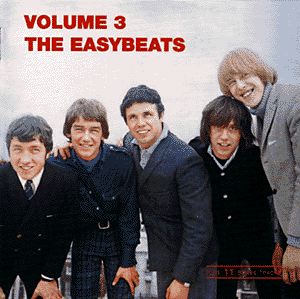
One of the tracks recorded with Talmy, "Friday on My Mind", was released as a single. It reached #1 in Australia, #6 in the U.K. and #16 in the United States and was a Top 10 song in Germany, Holland, France and Italy and sold over one million copies.
The Easybeats toured Europe and the United States with the Rolling Stones, but Fleet left the band. Tony Cahill replaced him, and the group released the singles "Good Times" and "Falling Off The Edge Of The World", which were minor hits. A follow-up album was recorded but never released because of financial and contractual problems.
In 1968, the Easybeats split up due to drugs and the independence of the Vanda-Young songwriting team. Vanda and Young returned to Australia, where they wrote and produced hits for John Paul Young including "Love Is in the Air". They then produced the first six albums for AC/DC, which featured George's younger brothers Angus and Malcolm Young.
The Easybeats released seven albums in their career, with "Friday on My Mind" being their only major success.
The Easybeats toured Europe and the United States with the Rolling Stones, but Fleet left the band. Tony Cahill replaced him, and the group released the singles "Good Times" and "Falling Off The Edge Of The World", which were minor hits. A follow-up album was recorded but never released because of financial and contractual problems.
In 1968, the Easybeats split up due to drugs and the independence of the Vanda-Young songwriting team. Vanda and Young returned to Australia, where they wrote and produced hits for John Paul Young including "Love Is in the Air". They then produced the first six albums for AC/DC, which featured George's younger brothers Angus and Malcolm Young.
The Easybeats released seven albums in their career, with "Friday on My Mind" being their only major success.
#123: Hey There Delilah--Plain White T's
When this artist began, she was hailed as 'the next big superstar"...
#122: Chuck E's in Love--Rickie Lee Jones
Jones was born in Chicago, Illinois; her family moved to Arizona in 1959 then to Olympia, Washington. Rickie Lee moved to Venice, California and studied music and anthropology at Santa Monica College. At age 21, Jones began playing in clubs in Venice. When Jones moved to Hollywood, she was discovered by Dr. John and Little Feat's Lowell George.
Jones performed original material at the Ala Carte club in Hollywood. In 1978, Jones met producers Lenny Woronker and Tommy LaPuma and signed a recording contract with Warner Brothers Records. In 1979, Jones released her self-titled debut album and promoted it with a sparkling performance on Saturday Night Live. The album included performances by Michael McDonald, Randy Newman and Dr. John.

Jones released the single "Chuck E.'s in Love", which reached #4 in the United States. The follow-up "Young Blood", however, only reached #40. So it was her first single that was largely responsible for her five Grammy nominations: Record of the Year, Song of the Year, Best Pop Vocal Performance, Female, Best Rock Vocal Performance, Female and Best New Artist. Jones won the Grammy for Best New Artist and, of course, the curse that goes with it.
After moving to New York City, Jones worked on her next album. Pirates was released in 1981, a full two years after her debut--a definite no-no in the music business. The most popular of the songs on Pirates was "A Lucky Guy", with a disappointing peak of #64.
Jones did another tour, then moved again, first to San Francisco, then to France. She began performing more jazz music and getting away from the songs that made her first album so popular. Jones and Walter Becker of Steely Dan wrote "The Horses", which was featured in the movie Jerry Maguire. In 1989, she released the album Flying Cowboys, co-written with Becker. "Satellites" became a minor hit on the Modern Rock chart. A cover of "makin' Whoopee" done with Dr. John earned Jones a Grammy for Best Jazz Vocal Collaboration.
But after that, even Jones admitted she battled writer's block, and she never again produced the magic of her first album, nor her one hit, "Chuck E.'s in Love".
At #121, one of the key members of Sly & the Family Stone:
#121: One in a Million You--Larry Graham
Graham was born in Beaumont, Texas. From 1966 to 1972, he played bass in Sly and the Family Stone. He is credited with inventing the "slap-pop technique" on the bass, in part to provide percussive and rhythmic elements in addition to the notes of the bass line. To play slap-pop, the player uses a percussive thumb-slapping technique of the lower strings with an aggressive finger-snap of the higher strings.
After leaving Sly and the Family Stone, Graham formed his own band, Graham Central Station, and released seven albums under that name. He had a following, but no songs were popular with the masses.

In 1980, Graham recorded the song "One in a Million You", the title song from his album that he released that year under his own name. The song was an across-the-board hit, reaching #9 overall, #1 on the R&B chart, and Top 10 on the Adult Contemporary chart.
Graham released four other solo albums, with "Just Be My Lady" at #67 being his next-best song. Larry reformed Graham Central Station in the early 1990's and performed with the band for several years. Graham played bass on tour with Prince from 1997-2000. Graham is the uncle of rapper Aubrey Graham (Drake).
This act from the City of Brotherly Love enjoyed a big R&B hit in 1974 that crossed over to the mainstream:
#120: Sideshow--Blue Magic
This group was founded in 1972 in Philadelphia, Pennsylvania by lead singer Ted Mills, Vernon Sawyer, Wendell Sawyer, Keith Beaton and Richard Pratt. Blue Magic signed a recording contract with Atco Records.
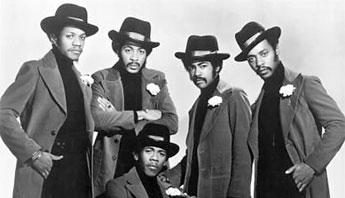
The singles from Blue Magic's debut album in 1973 were mostly confined to the R&B chart. But on 1974, "Sideshow" became a big hit, rising to #8 and selling over one million copies. The group performed on television shows including Soul Train and The Mike Douglas Show. "Three Ring Circus" reached #36 overall and #5 on the R&B chart.
Blue Magic was able to land further R&B hits, but they would never enjoy another popular song. They released 9 albums and 22 singles in their career.
This group unfortunately didn't record anything for three years following this smash, and it doomed them:
#119: So Alive--Love and Rockets
Daniel Ash (vocals, guitar and saxophone), bassist David J and Kevin Haskins (drums and synthesizers) formed Love and Rockets in 1985 in England after the group Bauhaus split in 1983. Love and Rockets enjoyed a minor hit with a remake of the classic "Ball of Confusion" by the Temptations.
Love and Rockets released their first studio album Seventh Dream of Teenage Heaven in 1985. They followed this with Express in 1986, which included the dance hit "Yin and Yang (The Flowerpot Man)". In 1987, the group released the album Earth, Sun, Moon, which received some airplay on Modern Rock radio stations.
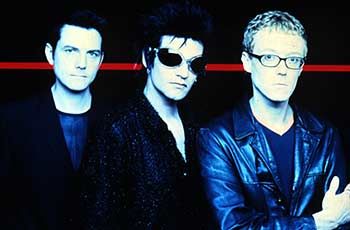
In 1989, Love and Rockets released their self-titled album, and the second single, "So Alive", caught on, reaching #3 in the United States. The success of "So Alive" led to a major touring schedule, and the group took a few years off afterwards before returning to the studio. Music pros will tell you this is a cardinal sin in the music business.
And history bears this out. RCA Records dropped the group, and they had to sign with the small label American Records. Love and Rockets released Hot Trip to Heaven in 1994, five years after their last album. The group released two more albums before breaking up in 1999.
This artist achieved his big after his musician father died.
#118: Save Tonight--Eagle-Eye Cherry
Born in Stockholm, Sweden, Cherry and his sister Neneh spent several months on the road with their father, jazz artist Don Cherry, each year. At the age of 12, Cherry was sent to school in New York. Upon graduation, he stayed in New York City to work as an actor and a drummer in several bands. Eagle-Eye appeared in the 1988 movie Arthur 2: On the Rocks and in 1993, he starred in the television show South Beach.
In 1995, his father died and Cherry moved back to Stockholm to focus on music. He began writing songs and recording his debut album Desireless in his bedroom studio. The album contained "Save Tonight", which was released as the first single. The song reached #2 in Sweden, #3 in Ireland, #5 in the United States, #6 in the U.K., #7 in Switzerland and #9 in The Netherlands and helped the album sell four million copies worldwide.
In 1998, Cherry reached #8 in the U.K. with the single "Falling in Love Again", but the success there did not spread to other countries. Cherry co-wrote and sang on "Wishing It Was" on Santana's blockbuster 1999 album Supernatural as well as in several movies.
Cherry has released six albums and 11 singles in his career.
Here's one of the top songs of the early 60's:
#117: Hey! Baby--Bruce Channel
Channel got his start on the Louisiana Hayride radio show before teaming up with Delbert McClinton. Channel co-wrote "Hey! Baby" with Margaret Cobb in 1959 and performed the song for two years before recording it.
The single was originally released on the small LeCam label, but when it caught fire, Smash Records picked it up and distributed it. "Hey! Baby" reached #1 for three weeks in 1962 in the United States, hit #2 in the U.K. and sold over one million copies. Bruce toured Europe and at one gig the Beatles, who were still unknown, opened for him.
Channel did reach the Top 100 with four other singles, but his next best was "Number One Man" at #52. He then concentrated on songwriting, writing songs for T.J. Sheppard, John Conlee, Janie Fricke and Mel McDaniel.
"Hey! Baby" is now part of football tradition for Louisiana State and Penn State, with the entire student section singing the song during the third quarter of games.
#116: The Reason--Hoobastank
We're up to the #1 smash that included Phil Spector:
#115: To Know Him Is to Love Him--Teddy Bears
After graduating from Fairfax High School in Los Angeles, Phil Spector was convinced his song, "To Know Him Is to Love Him" should be recorded by his group, the Teddy Bears. Spector, Marshall Leib, Harvey Goldstein and Annette Kleinbard went into Gold Star Studios and recorded the session. Spector also arranged and produced the song.
The single was released on Dore Records in 1958, and it rose to #1 for three weeks. It became one of the biggest songs of the year.
But subsequent releases by the Teddy Bears did not sell and after a year, Spector broke up the group. Of course, Spector went on to much fame as creator of "The Wall of Sound" production. Kleinbard changed her name to Carol Connors, and wrote "Hey Little Cobra" for the Rip Chords and co-wrote "Gonna' Fly Now" for the "Rocky" Soundtrack.
#114: Butterfly--Crazy Town
Up next, the artist who recorded a song so popular that countless artists have covered it:
We're up to the artist who gave us one of The Top 100 R&B Songs of the 70's*:
An opportunity to sing with Whitney Houston opened doors for this next artist, and he soon had a #1 song himself:
#103: San Francisco--Scott McKenzie

This rock standard gave our next artist his only hit:
It's shocking that this artist could come up with one of the biggest hits of 1986 and not be bigger stars:
#101: Shattered Dreams--Johnny Hates Jazz
Again, the last few days should show the reason why 500 was the number chosen for this special, rather than 100. But 100 is the number we are down to, and you'll hear those beginning tomorrow on Inside The Rock Era!
This duo landed one of the biggest hits of the new millennium:
#114: Butterfly--Crazy Town
Bret Mazur and Seth Binzer formed this group in 1995 in Los Angeles, California, although they didn't get serious with recording until much later. By 1999, the group added guitarist Rust Epique, James Bradley, Jr., Doug Miller, Adam Goldstein and Antonio Lorenzo Valli.
Crazy Town released their debut album The Gift of Game in 1999 and opened for the Red Hot Chili Peppers on tour. Kraig Tyler replaced Epique while the album was being mixed. "Toxic" and "Darkside" were released as singles but neither one caught on.
Two years later, the group released the single "Butterfly" and the third time was the charm. It became a smash #1 song in the United States, Switzerland and Austria, #2 in Finland, #3 in the U.K., #4 in Australia and #8 in the Netherlands and gave the album 1.5 million in sales. A fourth single, "Revolving Door" was not successful.
In 2002, Crazy Town released the album Darkhorse with new drummer James Bradley. "Drowning" was only a minor hit and the album did not sell well. Shortly after the album's release, the group broke up.
#113: Jackie Blue--Ozark Mountain Daredevils
This artist opened for artists as diverse as B.B. King and the Allman Brothers:
#112: Sunshine--Jonathan Edwards
One of the elite guitarists of the Rock Era comes in next:
#110: Rock & Roll, Hoochie Koo--Rick Derringer
Derringer opened for Led Zeppelin on their final American tour in 1979. In the 1980's, Derringer produced for "Weird Al" Yankovic and played guitar and mandolin on the track "Eat It" and played guitar for Silver Condor. In 1983, Derringer played on the Kiss album Lick It Up.
Derringer has released 18 albums in his career.
This artist recorded a #1 song that reflected the spiritual awakening of a generation:
#112: Sunshine--Jonathan Edwards
Edwards began his career in high school, putting a band together, writing songs and learning all the contemporary folk songs of the time. He studied art at Ohio University, but left to pursue music in Boston, Massachusetts. His band played all over New England under various names, including the Headstone Circus, St. James Doorknob and the Finite Minds. They recorded an album for Metromedia Records as Sugar Creek.
Soon, Edwards began opening for B.B. King and the Allman Brothers, and he signed a recording contract with Capricorn Records. After a year spent recording his self-titled debut album, the engineer accidentally erased the song "Please Find Me". The engineer was fired and the war protest song "Sunshine" was put in its place.

"Sunshine" was released as the single and it rose to #4 and sold over one million copies. Other artists, such as Juice Newton, Susanna Hoffs and the Isley Brothers, have recorded their versions.
Edwards released 10 albums in his career, but his initial time of songwriting inspiration resulted in his only hit.
#111: Kiss Me--Sixpence None the Richer
One of the elite guitarists of the Rock Era comes in next:
#110: Rock & Roll, Hoochie Koo--Rick Derringer
When he was seventeen, Derringer started the group the McCoys. The band changed its name to The Rick Z Combo and then Rick and the Raiders before going back to the original name of the McCoys. The McCoys recorded "Hang On Sloopy", which was the #1 song in the U.S. until "Yesterday" by the Beatles topped it. The McCoys opened for the Rolling Stones for their entire 1966 American Tour. Derringer adopted his stage name from the Bang Records logo which featured a derringer pistol.

After leaving the McCoys, Derringer ventured into blues rock, hitting #23 with "Rock and Roll, Hoochie Koo" in 1974. Derringer also played and recorded with the Edgar Winter Group and Johnny Winter's band and recorded on several songs for Steely Dan, Alice Cooper and Todd Rundgren.
After leaving the McCoys, Derringer ventured into blues rock, hitting #23 with "Rock and Roll, Hoochie Koo" in 1974. Derringer also played and recorded with the Edgar Winter Group and Johnny Winter's band and recorded on several songs for Steely Dan, Alice Cooper and Todd Rundgren.
Derringer opened for Led Zeppelin on their final American tour in 1979. In the 1980's, Derringer produced for "Weird Al" Yankovic and played guitar and mandolin on the track "Eat It" and played guitar for Silver Condor. In 1983, Derringer played on the Kiss album Lick It Up.
Derringer has released 18 albums in his career.
This artist recorded a #1 song that reflected the spiritual awakening of a generation:
#109: Spirit in the Sky--Norman Greenbaum
Greenbaum performed in several high school bands before he studied music at Boston University. He performed at local coffeehouses in Boston, then moved to Los Angeles in 1965.
Greenbaum wrote and recorded "Spirit in the Sky" in 1969 and it reached #1 and sold two million copies. Norman recorded four albums in his career but "Spirit in the Sky" was his one breakthrough.
#108: Sunny--Bobby Hebb
Robert Von Hebb and his brother Harold performed as a song-and-dance team in Nashville, Tennessee when Bobby was three. Bobby performed on a television show hosted by producer Owen Bradley, which earned him a job in Roy Acuff's band.
Hebb played with Johnny Bragg and the Marigolds, sang backup for Bo Diddley and replaced Mickey Baker in another One-Hit Wonder, Mickey and Sylvia. After his father was killed in 1963, Hebb turned to songwriting.
Bobby recorded "Sunny" and sent demos to producer Jerry Ross. The song was released as a single and reached #2 in the United States and #12 in the U.K. and sold over one million copies. Hebb toured with the Beatles in 1966 to promote his song.
Many of the greatest, including Stevie Wonder, Frank Sinatra and Duke Ellington, the Four Seasons, the Four Tops, Cher, James Brown, Ella Fitzgerald, Johnny Rivers, Dusty Springfield, the Classics IV and Wilson Pickett, have all recorded "Sunny".
Hebb's next-best song was "A Satisfied Mind" in 1966 (#39). He wrote many other songs, including "A Natural Man" for Lou Rawls.
We're up to the artist who gave us one of The Top 100 R&B Songs of the 70's*:
#107: Mr. Big Stuff--Jean Knight
After graduating from high school, Jean Caliste began singing at the bar Laura's Place. In 1965, she recorded a demo of the Jackie Wilson song "Stop Doggin' Me Around". Huey Meaux liked what he heard, and signed Jean to a recording contract at Jet Star/Tribe Records.
Caliste changed her stage name to Jean Knight and recorded four singles which attracted only local attention. As he singing career was not taking off, she went to work at a cafeteria in New Orleans, Louisiana.
In 1970, songwriter Ralph Williams discovered Knight and asked her to record some songs. Through the help of producer Wardell Quezergue, Knight recorded several songs, including "Mr. Big Stuff". But the big national labels all rejected the song.
But Stax Records saw the potential and released the single, and it was a smash, hitting #2 overall and #1 on the R&B chart. The song sold over two million copies and earned Knight a Grammy nomination for Best R&B Vocal Performance, Female.
Knight recorded an album which did well, but disagreements with her producer and label terminated her contract with Stax. Jean released four albums and six singles, with her next-best song being "My Toot Toot" at #50.
This successful songwriter kept one for himself in 1974:
This successful songwriter kept one for himself in 1974:
#106: Please Come to Boston--Dave Loggins
Loggins, a cousin of superstar Kenny Loggins, is best remembered as a successful songwriter. He notably wrote "Pieces of April" for Three Dog Night, a huge hit in 1973, and wrote the Kenny Rogers hit "Morning Desire". He has also written songs for Alabama, Reba McEntire, Restless Heart and Don Williams.
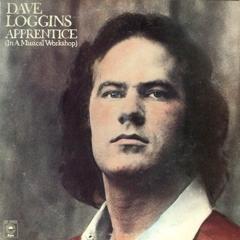
But he landed the Top 5 song "Please Come to Boston" in 1974, which also reached #1 on the Easy Listening chart. Dave was able to have a #1 country song with Anne Murray in 1984 with "Nobody Loves Me Like You Do", but could never duplicate his solo success with a mass appeal audience. Loggins did write the theme song "Augusta" that is used on broadcasts of The Masters Golf Tournament.
Here's one of the New Wave acts that helped revitalize rock and roll in the 1980's:
#105: Tainted Love--Soft Cell
Soft Cell consisted of lead singer Marc Almond and instrumentalist David Ball, who met at Leeds Polytechnic School in England and began the group in 1978. The duo recorded the EP Mutant Moments, which generated interest from and ultimately resulted in a recording contract with Some Bizzare Records.

Soft Cell released "Memorabilia" as their first single, but when it flopped, they were given one last chance. They decided to record a remake of "Tainted Love", a 1964 soul song by Gloria Jones (the girlfriend of T. Rex's Marc Bolan at the time of his death).
"Tainted Love" hit #1 in 17 countries and reached #8 in the United States. At the time, it set the Rock Era record for the most consecutive weeks (43) on the chart.
The duo enjoyed five Top 10 hits in their native England and some success in Ireland, but could never match their worldwide appeal gained with "Tainted Love". They broke up in 1984 after releasing five albums and 18 singles.
An opportunity to sing with Whitney Houston opened doors for this next artist, and he soon had a #1 song himself:
#104: Shake You Down--Gregory Abbott
In his early years, Abbott began singing and playing the piano. He studied psychology at the University of California and creative writing at Stanford. He began session work in the recording studio; one of his first opportunities was a duet with Whitney Houston on an independent label. Abbott then produced the group EQ on Atlantic Records.
"Shake You Down" was the first single and title track from Gregory's debut album in 1986. It reached #1 in the United States and #6 in the U.K. and sold over two million copies.
"I Got the Feeling" at #56 was the next-best that Abbott could do. He was able to win first prize at the Tokyo Music Festival and he performed with Princess Stephanie of Monaco in Belgium. Abbott released 7 albums and 15 singles in his career.
This singer-songwriter turned down an offer to join the Mamas & Papas, then wrote what would become the anthem for a generation:
#103: San Francisco--Scott McKenzie
Philip Blondheim was born in Jacksonville, Florida, but grew up in North Carolina and Virginia, where he became friends with John Phillips. In the mid-1950's, Scott sang in a group known as the Singing Strings, then later in a doo wop band the Abstracts. The Abstracts became the Smoothies and recorded two singles with Decca Records. It was during this time that Blondheim changed his stage name to Scott McKenzie.
In 1961, Phillips and McKenzie met Dick Weissman and formed the folk group, the Journeymen. That act recorded three albums and seven singles for Capitol Records. The Journeymen split in 1964, with Phillips forming the group the Mamas & the Papas. McKenzie had declined an offer to join the Mamas & Papas, but instead set out on a solo career.
Scott signed a recording contract with Ode Records. Phillips wrote, played guitar and co-produced a song he had written for McKenzie called "San Francisco (Be Sure To Wear Flowers In Your Hair)". Esteemed session musicians Joe Osborn on bass and drummer Hal Blaine also played on the song, which was released in 1967. The song became a smash for McKenzie, reaching #1 in the U.K. and several other countries and #4 in the United States. It went on to become an anthem for a generation and has now sold over seven million copies.
McKenzie's follow-up, "Like An Old Time Movie" was a minor hit. He recorded his debut album, The Voice of Scott McKenzie. In 1968, he wrote "Hey! What About Me" that helped launch the career of Anne Murray. McKenzie released his only other album, Stained Glass Morning, in 1970.
In 1986, McKenzie began singing with a new version of the Mamas & the Papas and in 1988, co-wrote "Kokomo", the first #1 hit for the Beach Boys in 22 years. Despite recording the Rock standard "San Francisco", McKenzie never did reach the Top 40 again.
This rock standard gave our next artist his only hit:
#102: Rock On--David Essex
Essex took his name from his birthplace of Plaistow, which was in Essex, England at the time. David went to Shipman County Secondary School and dreamed of being a professional football (soccer) player. But he also loved music, and played drums in a local band.

Essex recorded his first single "And the Tears Came Tumblin' Down" on Fontana Records in 1963, then toured under the name David Essex and the Mood Indigo. He got his first break in the entertainment business when he earned the lead role in the stage musical Godspell in 1971. In 1973, he starred in the movie That'll Be The Day, then recorded his only worldwide hit, "Rock On".
"Rock On", which David wrote, hit #5 in the United States but was a bigger hit than that for the stations who played it. The song landed at #1 in Canada. Def Leppard, the Smashing Pumpkins and Toni Basil are among the artists who have remade the song.
Essex's single "Lamplight" was a Top 10 hit in the U.K. but airplay was not universal; it only reached #71 in the United States. He tasted bigger success in his native country with "Gonna' Make You a Star" and "Hold Me Close", but once again, worldwide airplay was limited. Overall, Essex released 28 albums and 31 singles, an incredible output for an artist who was only able to achieve one major worldwide hit.
It's shocking that this artist could come up with one of the biggest hits of 1986 and not be bigger stars:
#101: Shattered Dreams--Johnny Hates Jazz
Clark Datchler (vocals, keyboards and guitar), Mike Nocito (bass and guitar) and Calvin Hayes (keyboards and drums) met in the early 1980's while working on various projects at RAK Studios in London. Datchler was the lead singer of Hot Club, a group that Hayes founded while Nocito had worked with the Police, Pink Floyd, Duran Duran and the Cure as a recording engineer. The trio formed Johnny Hates Jazz in 1986.

Johnny Hates Jazz released their first single "Me and My Foolish Heart". It flopped, but Datchler wrote "Shattered Dreams" and the group performed it at Ronnie Scott's jazz club. Their performance earned them a recording contract with Virgin Records. Johnny Hates Jazz released "Shattered Dreams" as a single, and it was a worldwide smash, hitting #2 overall and #1 on the Adult Contemporary chart in the United States, # 2 in Japan and was a Top 5 song in the U.K. and Australia. The song was one of the biggest hits of 1986 and one of The Top #2 Songs of the Rock Era*.
In 1987, the group released the single "I Don't Want to be a Hero", which reached #11 in the U.K. but only #31 in the United States. "Turn Back the Clock", with Kim Wilde singing background vocals, was #12 in the U.K. and reached #5 on the Adult Contemporary chart in the United States but only #31 overall.
Johnny Hates Jazz released the album Turn Back the Clock, helped tremendously by "Shattered Dreams". The song was played over three million times in the United States.
The group released two albums and nine singles, but could never capitalize on their huge hit.
Again, the last few days should show the reason why 500 was the number chosen for this special, rather than 100. But 100 is the number we are down to, and you'll hear those beginning tomorrow on Inside The Rock Era!


No comments:
Post a Comment
Note: Only a member of this blog may post a comment.